

AI Automations
We design, build and ship AI that earns its place: assistants that answer customers, agents that run workflows, and models that turn your data into decisions.

Every engagement starts with a workflow, not a model.
We find the step where people lose the most time or the business loses the most money, prototype an AI solution against your real data, and measure it before we scale it.
We build on leading foundation models and open-source stacks, connect them to your systems through secure APIs, and keep humans in the loop where judgement matters. The products we run ourselves, like the TalkingMe hiring platform, the AI chatbot and AI-powered analytics, come from the same team.
Where AI takes work off your team
Answer customers instantly
A chatbot or copilot trained on your products, policies and orders answers the common questions day and night, and hands anything tricky to a person with the conversation so far.
- Chatbots & copilotsCustomer-facing assistants and internal copilots grounded in your own content (RAG), in Arabic and English.
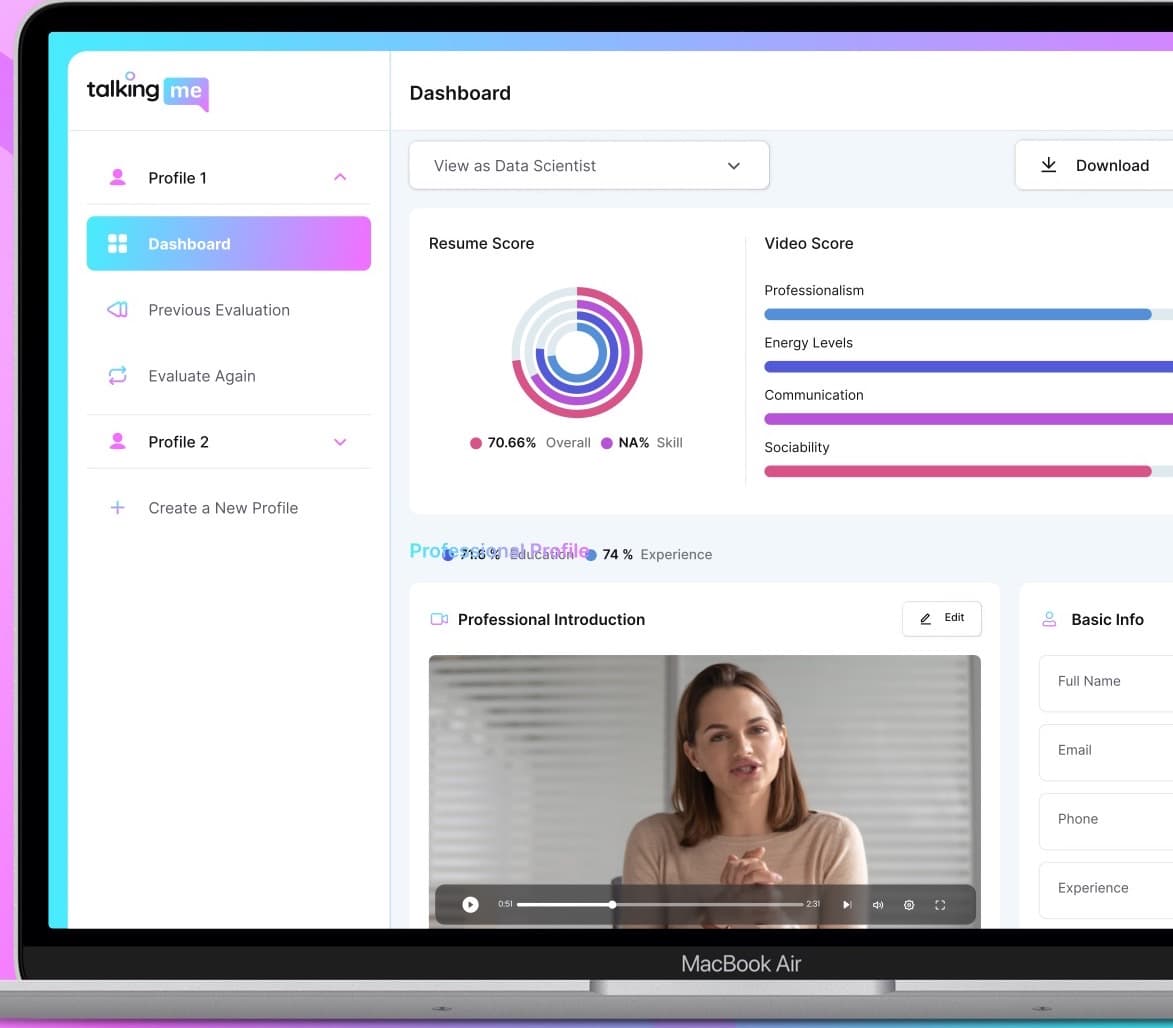
Our product: TalkingMe
Automate the busywork
Agents read emails, invoices and forms, check them against your rules and update your systems, so your team only handles the exceptions.
- AI agents & automationAgents that read, decide and act across your tools, such as triaging tickets, processing documents and updating records.
- Document & vision AIExtract, classify and verify invoices, IDs, résumés and forms at scale.
- Invoice arrives by email
- AI reads the PDFSupplier, amounts, VAT, line items
- Checked against the purchase order
- Posted to your accounts
- Only mismatches go to a person
Turn data into decisions
Models that forecast demand, flag risk and spot patterns in your data, built into the dashboards and products your team already opens every day.
- Machine learning & analyticsForecasting, scoring and anomaly detection built on the data you already have.
- AI inside your productAdd search, summaries, recommendations and voice to existing web and mobile apps.
Keep it safe and accurate
Every AI feature is tested on real examples before launch and watched afterwards, with limits on what it may do and people approving the actions that matter.
- Evaluation & guardrailsAccuracy testing, cost control, privacy and safety checks before and after launch.
- Tested on 500 real customer questions
- Personal data masked before it reaches the model
- Every answer and action logged
- Refunds over $100 need a person's approvalNeeds approval
Where AI pays off first
- Your team answers the same questions all day.
- Staff re-type data from PDFs, emails or forms into another system.
- Decisions wait on someone pulling a report together.
- You screen large volumes of applications, leads or tickets by hand.
- Customers expect answers outside office hours.

How we work
- Week 1Find the workflowWe sit with your team, map where time and money are lost, and pick the one job where AI will pay back fastest.
- Weeks 2–3PrototypeA working prototype on your real data, so you can judge the results before committing to a full build.
- Weeks 3–8Build and connectWe build it properly, connect it to your systems and add the limits, logs and approvals it needs.
- LaunchTest and roll outTested against real examples, then released to a small group first and widened as it proves itself.
- Every monthMeasure and improveWe track accuracy, time saved and cost, and keep tuning it as your business changes.
Our products and client work for AI Automations
All productsQuestions
Where should we start with AI?
With one repetitive, high-volume job that already has clear rules, such as answering order questions or processing invoices. It's quick to measure, and it builds trust before you automate more.
Is our data safe?
We mask personal data where possible, use providers that don't train on your data, and can run models on your own servers when the data can't leave your building.
What if the AI gets something wrong?
We test it on real examples before launch, limit what it can do, log every action and put a person in the loop for decisions that matter. Mistakes are caught and used to improve it.
Will it work with our current systems?
Usually, yes. We connect to CRMs, ERPs, help desks, email and spreadsheets through their APIs, or build a connection where none exists.
More services