

AI Model Integration
We put leading AI models to work inside the software you already run, securely and at a cost that makes sense.

We pick the right model for each job, from frontier models like GPT, Claude and Gemini to open-source models you can host yourself, and connect them to your app, website or back office through secure APIs.
Your own documents and data become usable through retrieval (RAG), so answers stay grounded in your business. We handle prompts, evaluation, caching and monitoring so quality stays high and running costs stay predictable.
From model to working feature
Put a model in your product
We connect the right model to your app, website or internal system, so features like search, writing help, image tools or virtual try-on run where your users already are.
- LLM integrationAdd AI features such as summaries, search, writing and classification to your web and mobile apps.
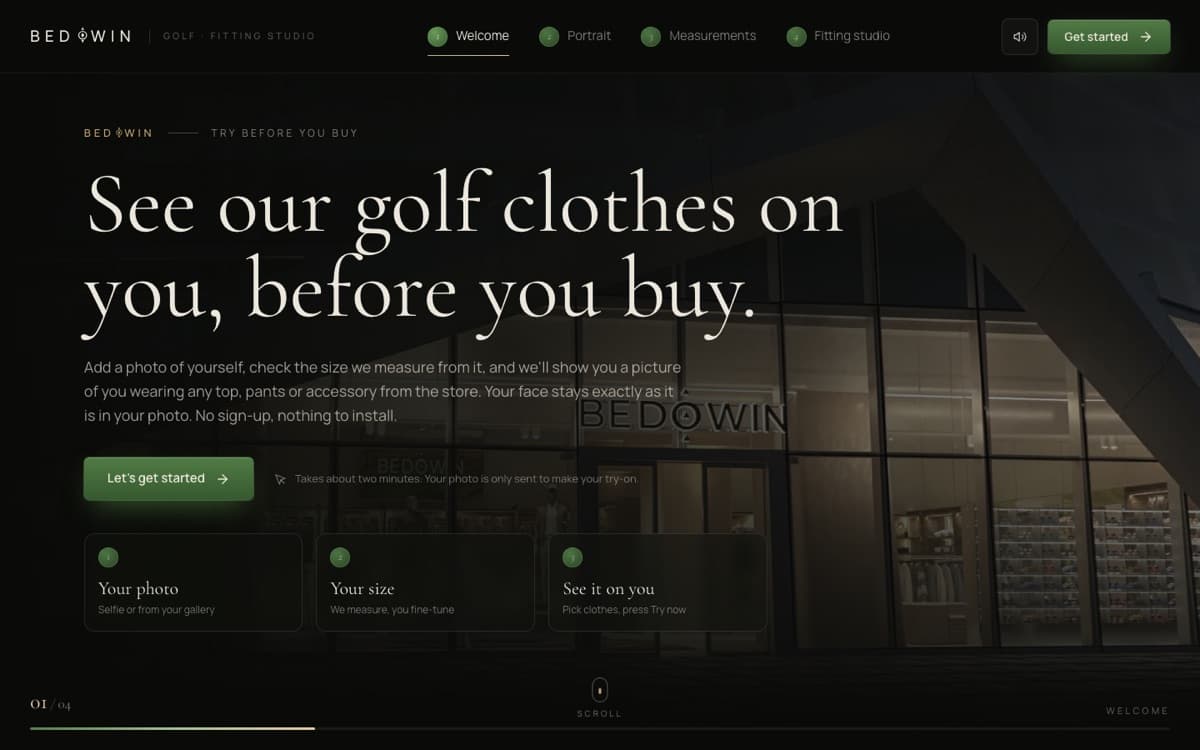
Our product: AI Fitting Studio
- Claude
- GPT
- Gemini
- Llama
Answers from your own data
With retrieval (RAG), the model looks up your documents, products and policies before it answers, and shows where each answer came from.
- RAG on your dataAnswers grounded in your documents, knowledge base and databases, with sources shown.
- Your documents and dataManuals, policies, product sheets
- Searchable indexUpdated when your files change
- The model reads the best matches
- Answer with its sources
Measure before you ship
We build a test set from your real cases and score every version against it, then fine-tune when a model needs to learn your style or terms.
- Fine-tuning & evaluationTune models for your tone and tasks, and test them against real examples before launch.
Keep data in house
When data can't leave your building, we run open-source models on your own servers or private cloud, with the same features and no outside access.
- Private & self-hostedOpen-source models on your own cloud when data has to stay in-house.
const answer = await ai.ask({
  model: "private-llama",   // runs on your servers
  question,
  sources: await search(question, { top: 5 }),
  rules: ["Cite every source", "Say when you don't know"],
});
How we work
- Week 1Choose the featureWe agree what the AI should do for your users, what data it can use and how we'll judge it.
- Weeks 1–2Compare modelsWe test a few models on your real examples and compare accuracy, speed and running cost.
- Weeks 2–6Build it inWe connect the chosen model to your product and data, with caching and limits to keep costs predictable.
- LaunchTest and releaseScored against the test set, then released to users with monitoring in place.
- OngoingWatch and upgradeWe track quality and cost, and move to better or cheaper models as they appear.
Our products and client work for AI Model Integration
All products- Our product · CommerceAI Fitting StudioVirtual try-on: shoppers see your clothes on themselves before they buy.
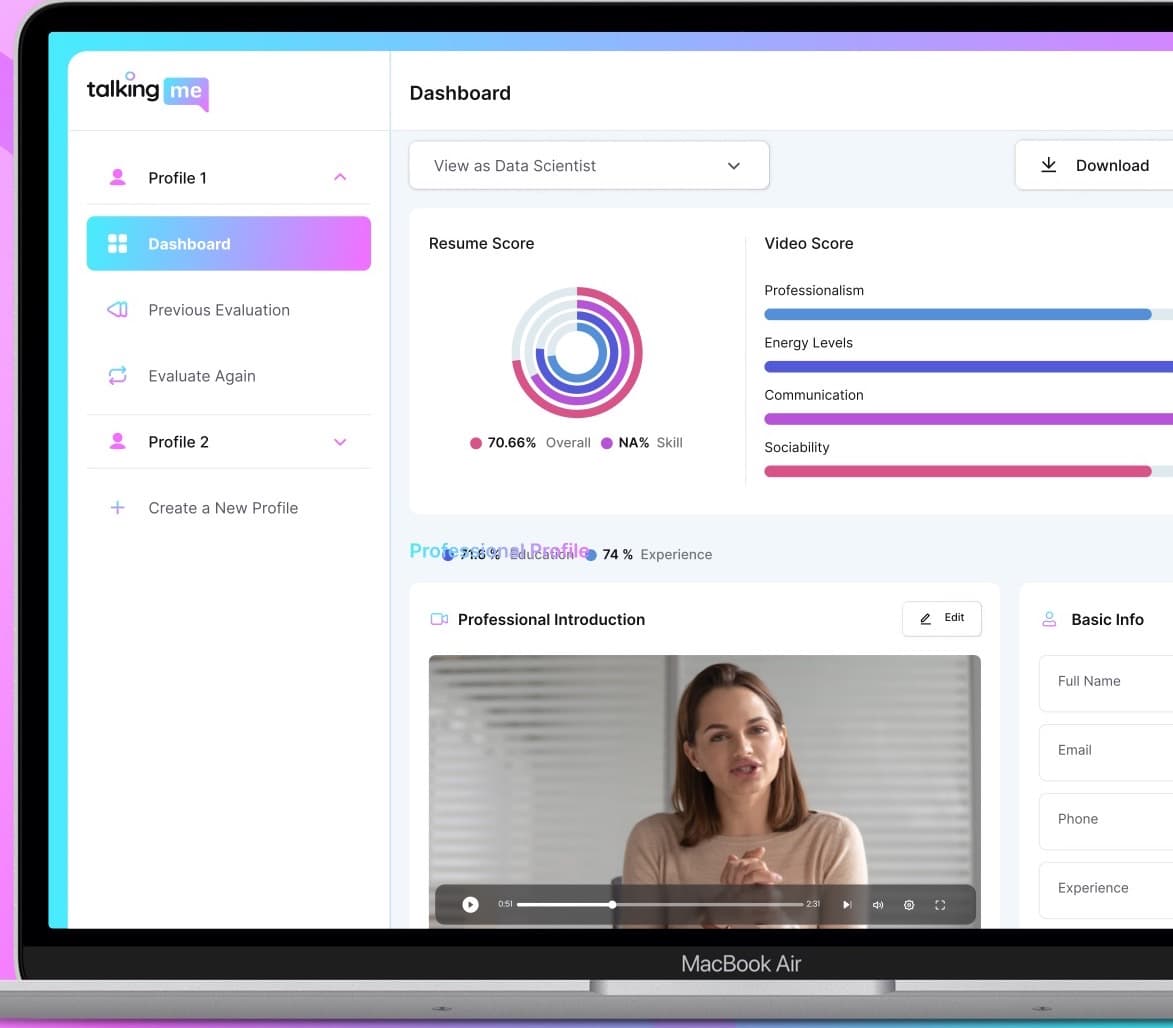
- Our product · AI & dataTalkingMeAI-powered résumé and video analysis for professional profiles.
- Our product · AI & dataAI ChatbotInstant, round-the-clock answers on every channel.
- Our product · AI & dataAI-Powered AnalyticsFrom raw data to real-time, predictive insight.
Questions
Which model should we use?
It depends on the job. We test several on your own examples and recommend the one with the best mix of accuracy, speed and cost, and keep the code ready to switch later.
How much does it cost to run?
Most features cost cents per use. We estimate running costs during testing and add caching and limits so the bill stays predictable as usage grows.
Will the model be trained on our data?
Not unless you choose to fine-tune. We use providers whose business terms exclude your data from training, or host models privately.
Can you add AI to software another company built?
Usually, yes, as long as we can reach its data or API. We review the system first and tell you what's possible.
More services